Ashbusters Chimney Service: Chimney Sweeping in Oak Ridge TN
At Ashbusters Chimney Service, we’re proud to bring trusted chimney sweeping services to the homeowners of Oak Ridge, TN. Our mission is to help families enjoy their fireplaces as safely and as efficiently as possible by removing creosote, clearing blockages, and identifying early signs of wear before they turn into major repairs. Whether you rely on your fireplace for daily winter heat or occasional seasonal ambiance, our team is committed to keeping your chimney clean, well-maintained, and ready for use when you need it.
What Does a Chimney Sweep Actually Do & Why Does It Matter?
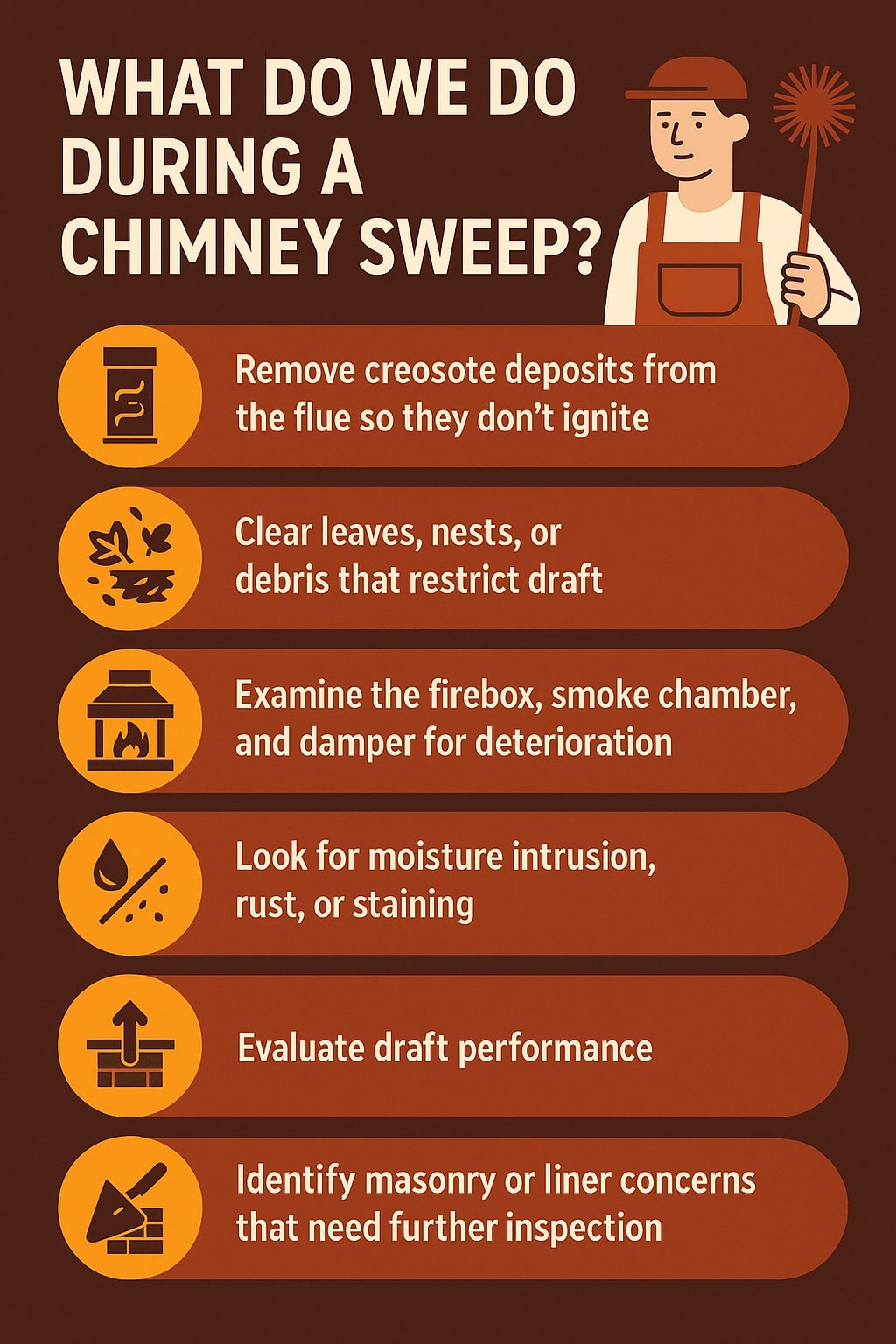
When homeowners in Oak Ridge ask what professional chimney sweeping includes, we always explain that it’s far more involved than simply brushing soot from the walls. A full sweeping service gives us a chance to restore airflow, reduce fire hazards, and ensure your chimney system is functioning the way it was designed to. Here’s what we typically address on every appointment:
- Remove creosote deposits from the flue so they don’t ignite
- Clear leaves, nests, or debris that restrict draft
- Examine the firebox, smoke chamber, and damper for deterioration
- Look for moisture intrusion, rust, or staining
- Evaluate draft performance
- Identify masonry or liner concerns that need further inspection
A well-swept chimney not only improves performance but also reduces stress on the system. We’re always watching for the small details that homeowners may not see but that make a major difference in long-term chimney health.
Why We Love Serving Oak Ridge TN
From its deep scientific history to its beautiful outdoor spaces, Oak Ridge is a one-of-a-kind community. Locals enjoy places like the American Museum of Science and Energy, Haw Ridge Park, and Melton Hill Lake. The city blends innovation with natural beauty, creating a welcoming environment filled with curiosity, nature, and family-friendly fun. We’re honored to serve homeowners in an area that values comfort and quality living.
How Does Burning Different Fuels Affect Creosote Buildup?
Across Oak Ridge homes, we see how fuel choice dramatically affects the rate and type of creosote buildup. Wood-burning systems produce the most variation. Dry, seasoned hardwood burns hotter and cleaner, while wet or unseasoned wood burns cooler and creates dense smoke that condenses quickly inside the flue. This is the kind of buildup that can become thick glaze if left untouched. Pellets burn cleaner but create fine ash that collects in narrow vent pipes, sometimes clogging them faster than expected. Gas appliances create minimal creosote, but they still produce byproducts that can corrode liners if moisture or drafting problems exist.
Homeowners often ask more unusual questions too. What happens if you light a fire when the flue is still damp after heavy rain? Moisture cools the smoke immediately, which accelerates creosote formation. Can a chimney’s draft change years after construction? Absolutely. Nearby additions, new roofs, or maturing trees can shift wind patterns and create drafting issues. Fuel type is just one piece of the puzzle, and during a sweeping we evaluate every factor that could affect buildup inside your flue.
After a Major Storm, When Is It Safe to Use the Fireplace Again?
Kentucky and Tennessee weather can bring strong winds, downpours, and the occasional severe storm. After high winds, heavy rain, or tornado-related gusts, homeowners often reach out wondering when it’s safe to use their fireplace again. Storms can loosen chimney caps, shift flashing, damage mortar joints, or send branches and debris down the flue. Even minor damage can lead to dangerous blockages or smoke backup.
Moisture is another concern. If the chimney becomes saturated, lighting a fire too soon can create steam inside the flue, cool the smoke, and cause rapid creosote accumulation. Seemingly small issues like a slightly lifted cap or a cracked crown can lead to significant moisture intrusion. A post-storm sweeping and inspection lets us verify that airflow is clear, masonry is stable, and no hidden hazards developed during the storm.
Homeowners also ask whether chimneys can withstand tornado-strength winds. While a direct hit is rare, extreme gusts can put significant stress on aging mortar or already-compromised brickwork. Early inspections after major weather events help us catch vulnerabilities before they worsen.
How Fast Can Crumbling Mortar Compromise Chimney Stability?
Mortar deterioration is one of the most misunderstood chimney issues. Many homeowners assume it takes decades for mortar wear to become a threat, but freeze–thaw cycles in East Tennessee can speed up the process dramatically. When water enters small cracks and freezes overnight, it expands and enlarges those openings. This cycle repeats throughout the colder months, and each round weakens the joints a little more.
Once mortar begins crumbling, the chimney loses its rigidity. Gaps allow more moisture in, which accelerates the breakdown. Seasonal temperature swings can widen cracks enough to cause partial brick displacement. In some cases, chimneys with neglected mortar can lean or begin shifting in a single season. We’re often asked whether small mortar flakes on the ground are a serious concern. They are, because they indicate active deterioration inside the structure, not just surface wear.
A sweeping helps uncover early warning signs because we see both the exterior and interior conditions. We may notice increased debris inside the firebox, unusual staining on the smoke chamber walls, or shifting bricks that suggest deeper structural problems. Addressing mortar issues early keeps the chimney standing strong and helps homeowners avoid costly rebuilds later.
How Do We Detect Microscopic Cracks in Chimney Liners?
A common question during sweeping appointments is how we find liner problems that can’t be seen with the naked eye. Tiny cracks, gaps, and spalls inside a flue liner can allow heat transfer or expose the masonry to combustion byproducts. While you might not see these issues from the fireplace opening, they can be significant.
We use specialized video scanning equipment that lets us inspect every inch of the liner from top to bottom. This technology helps us detect microscopic fractures, heat-stressed tiles, corroded metal surfaces, and hidden voids that could impact performance. Homeowners are often surprised by how much wear can occur inside a flue that looks perfect from the outside. Draft disturbances, smoke seepage, and unexplained odors can be clues that something deeper is happening inside the liner. A sweeping allows us to clear the surface so we can capture a clean, accurate view during the inspection phase.
How Do Spring Pollen & Autumn Leaves Affect Chimney Blockages?
Most people associate chimney blockages with winter ice or animal nests, but seasonal debris plays a major role too. In spring, pollen and fine organic dust can cling to damp flue walls, forming a sticky film that slows airflow. Combined with early-season humidity, this residue can trap soot and creosote, making buildup accumulate faster once you begin using the fireplace in fall.
Autumn, of course, brings leaves, twigs, and seeds. Even with a chimney cap, strong winds can force lightweight debris into the flue or lodge it around the cap screen. This buildup narrows the airway and can lead to smoke spillage or sluggish draft once fires are lit. During a sweeping, we remove all seasonal debris and check the integrity and fit of the cap so these issues don’t repeat year after year.
Schedule Chimney Sweeping in Oak Ridge TN Today
Our team at Ashbusters Chimney Service is committed to keeping Oak Ridge fireplaces cleaner, safer, and ready for cozy nights at home. If it’s been more than a year since your last chimney sweeping or if you’ve noticed changes in how your fireplace performs, we’re here to help. Contact us today to schedule your appointment and experience the care and craftsmanship Oak Ridge homeowners count on.