Chimney Services » Chimney & Dryer Services »
We Provide Effective & Reasonably Priced Chimney Repairs All Throughout Knoxville, TN
When your chimney is in need of repair, you may have a lot of questions. Who should you call for repairs? How will you know what really needs to be done? How do you prevent damage or the need for repairs in the future?
After all, the unknown with chimney and fireplace repair can be stressful. But finding a reputable chimney repair professional, prioritizing regular inspections, and following proper maintenance guidelines are essential steps to help keep your fireplace operating in a safe and efficient manner – all while minimizing the cost of emergency repairs.
Thankfully, you’ve come to the right place in your search for trusted chimney repair and maintenance experts who can keep your home safer and your fireplace functioning flawlessly. Here at Ashbusters Chimney Service of Knoxville, we have decades of experience, so we know a thing or two about chimneys and fireplaces.
We are confident we can restore and repair your system so that it continues to warm your family for years to come. Give us a call at 865-412-4222 or reach out to us online today!
From Minor Fireplace Fixes to Major Chimney Restorations, We Do It All
We like to consider ourselves a one-stop shop for chimney repair services. Our comprehensive range of repairs ensures that all your chimney needs are met under one trusted roof. This includes:
Chimney Rebuilds
Chimney rebuilds involve the complete reconstruction of a chimney structure. This is typically due to extensive damage, structural instability, or the need for a significant upgrade – all of which are instances where repairs alone can’t effectively address the issues.
During a chimney rebuild, we dismantle the old chimney (or part of it), and construct a new one from the foundation up. When the new chimney is complete, we can ensure not only its safety and stability, but also its compliance with building codes and standards. We build chimneys to last for years to come.
Chimney Masonry Repair
When a chimney has suffered from wear, weather damage, or deterioration over time, chimney masonry repair services are often needed. This repair process typically addresses issues like cracks, loose or missing bricks, and crumbling mortar joints.
Masonry repair is not only important in maintaining the structural integrity of the chimney, but to also prevent further damage, water penetration, and potential safety hazards. Because of this, we offer a long list of masonry repair services, including tuckpointing, brick replacement, and the previously mentioned chimney rebuilds when necessary.
When repairs are complete, we will recommend waterproofing your chimney – a service that involves applying a protective sealant to the exterior of your chimney to enhance its durability and reduce the risk of damage down the line.
Chimney Relining
A chimney liner, often referred to as a flue liner, is an essential component of your chimney. It provides a proper channel for smoke and gas to safely exit your home, while preventing those harmful combustion byproducts from entering back into your living space. When a chimney liner has deteriorated or isn’t fitted correctly, the risk of fire hazards, toxic gas exposure, and structural damage to your chimney and home increases significantly. That’s why chimney relining services are a must.
HeatShield® Repair & Resurfacing
When it comes to chimney relining, our preferred method is HeatShield® because it provides a reliable and effective way to restore your chimney’s integrity at a price most homeowners can afford.
There are many methods of relining a chimney. Clay tile liners, metal liners, and cast in place are all effective and safe ways to protect your chimney. However, HeatShield® Chimney Liner Repair Systems have a rather unique installation process that stands out from the other options. Using a foam applicator, we apply a specially formulated Cerfractory sealant to repair and reinforce your existing chimney liner. This innovative approach ensures a smooth, durable finish while minimizing disruption and cost.
Chimney Leak Repair
Water in your chimney can create some major issues. That’s because water causes damage to just about everything it touches – from the chimney’s masonry to every interior component. It can lead to cracks, spalling bricks, deteriorated mortar joints, rusted chimney dampers, and even the growth of mold and mildew.
If you have any water damage or notice any signs of a leak within your chimney, give us a call right away. Prompt attention to water-related issues is crucial in preventing further and more costly repairs.
Chimney Caps
A small but vital component to your chimney system is the chimney cap. Sitting at the very top of the chimney, these protective covers serve multiple essential functions. They shield your chimney from rainwater (and prevent moisture-related damage), keep out birds and other animals, block debris from flying in, and help contain sparks and embers so they don’t ignite any nearby combustible materials.
Chimney caps are a simple, yet effective way to reduce your risk of chimney fires and roof damage while also extending the lifespan of your chimney.
Who Should You Call For Chimney Repairs & How Do You Know What Really Needs To Be Done?
First things first, who should you call? There are no federal regulations for the chimney industry, and many homeowners have been ripped off, cheated, scammed, or left with workmanship that’s not up to code and certainly not safe. The Chimney Safety Institute of America (CSIA) is a non-profit organization that’s committed to educating and protecting homeowners for this very reason.
That’s why the CSIA developed a certification process for chimney professionals. In order to receive the certification, the chimney technician has to demonstrate extensive knowledge, pass rigorous testing, and agree to do his or her job with integrity. That’s why the CSIA is able to guarantee that homeowners are in better hands with a CSIA-certified chimney professional.
So when you’re looking for someone to repair your chimney — whether you need masonry work, chimney liner repair, or chimney leak repair and prevention — the first thing you should do is check the credentials of the chimney companies you’re looking at. For your safety and satisfaction, go with a CSIA-certified chimney sweep.
CWhy Do Wood-Burning Chimneys Require Repairs More Often Than Other Chimney Systems?
Wood-burning chimneys are among the most demanding residential systems in any home. Unlike gas appliances that burn clean and at consistent temperatures, wood fires produce intense, variable heat, corrosive creosote, acidic condensation, and heavy combustion byproducts — all of which take a significant toll on every component of the chimney over time. The result is a system that, without regular attention, deteriorates faster than most homeowners expect.
Several factors make wood-burning chimneys particularly prone to wear and damage:
- Thermal cycling: Wood fires heat the flue to extreme temperatures and then allow it to cool completely between uses. This repeated expansion and contraction stresses mortar joints, clay tiles, and masonry, causing cracking and deterioration over many seasons
- Creosote corrosion: Creosote is chemically acidic and highly corrosive to clay tile liners, metal components, and mortar. Prolonged exposure breaks down liner surfaces and accelerates joint failure
- Moisture intrusion: Water is one of the most destructive forces acting on any masonry chimney. Cracks in the crown, damaged flashing, missing caps, and deteriorating mortar all allow water to enter — leading to spalling brick, rusted components, and structural damage
- High burn temperatures: Particularly hot fires, or chimney fires caused by creosote ignition, can crack or collapse flue liner sections and damage the smoke chamber and firebox beyond what routine wear would cause
- Age and deferred maintenance: Many wood-burning chimneys in homes across East Tennessee were built decades ago and have never been relined or had significant masonry work performed
The good news is that most chimney repairs, when caught early through regular inspections, are straightforward and cost-effective. It’s deferred maintenance that turns manageable repairs into major structural projects.
What Are the Most Common Chimney Repairs Needed for Wood-Burning Fireplaces & Stoves?
Wood-burning chimney repairs span a wide range of components and conditions — from minor mortar work to full flue relining. Understanding the most common types of repairs helps homeowners recognize warning signs early and make informed decisions when a technician presents findings.
- Flue Liner Repair or Replacement: The flue liner is the most critical safety component of any wood-burning chimney, and it’s also one of the most commonly damaged. Cracked, spalled, or collapsed liner sections allow heat and toxic gases to reach the combustible framing surrounding your chimney – a direct fire and carbon monoxide hazard.
- Firebox Repairs: The firebox endures the most direct exposure to fire and heat of any chimney component. Over time, the refractory materials that line the firebox break down and require attention.
- Smoke Chamber Resurfacing: The smoke chamber – the funnel-shaped area above the firebox that transitions to the flue – is often overlooked but critically important to draft performance and fire safety.
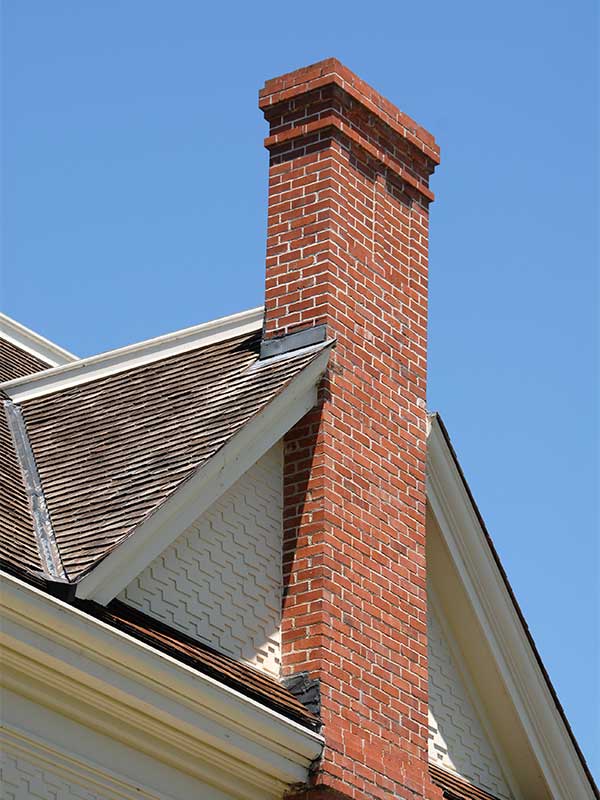
- Chimney Crown Repair or Replacement: The chimney crown is the concrete or mortar slab that covers the top of the chimney structure, leaving only the flue opening exposed. It’s the first line of defense against water intrusion – and one of the most frequently damaged components.
- Tuckpointing & Masonry Repair: The exterior masonry of a chimney faces constant exposure to weather, UV rays, and temperature extremes. Deteriorating mortar is one of the most common findings in older wood-burning chimney systems.
- Chimney Cap & Flashing Repair: Two often-underestimated components that protect everything beneath them.
What Is Flue Relining & When Does a Wood-Burning Chimney Need It?
Flue relining is one of the most important and most commonly recommended repairs for wood-burning chimney systems – particularly in older homes. It involves installing a new liner inside the existing flue to restore safe venting, improve performance, and bring the system up to current safety standards.
Many homes in East Tennessee were built with chimneys that either have no liner at all, have original clay tile liners that have aged past their service life, or were designed for appliances that are no longer in use. When a wood-burning fireplace or stove is connected to a compromised flue, the risks are significant, including chimney fire, carbon monoxide intrusion, and heat transfer to combustible framing.
Common reasons a wood-burning chimney needs relining:
- Cracked, broken, or missing clay tile sections identified during a Level 2 video inspection
- Previous chimney fire damage that has compromised liner integrity
- Installing a new wood stove or fireplace insert that requires a properly sized liner connection
- An unlined or inadequately lined flue — common in masonry chimneys built before modern safety codes
- An oversized flue relative to the connected appliance, causing chronic draft problems and accelerated creosote buildup
- Severe creosote corrosion that has degraded the liner surface beyond effective use
A properly installed stainless steel liner, when maintained with annual sweeping and inspection, can last 15 to 20 years or more — making relining one of the best long-term investments a wood-burning appliance owner can make in the safety and performance of their chimney system.
How Do You Know If Your Chimney Needs To Be Repaired?
Here are a few common signs that can signal problems with your chimney system:
- Bad odors. Odors in the chimney are usually caused by creosote or nesting animals. Both will need to be removed and repairs may need to be made.
- Smoke problems. Your fireplace really shouldn’t be putting smoke back into your home, so if it is, there’s a problem. There could be a flue blockage or your chimney may not be achieving proper draft. Either way, you’ll need to have the chimney looked at so a solution can be found.
- White staining on your brick. White stains on your brick signal one thing: excess water. Excess water will lead to chimney leaks and masonry damage, possibly even chimney collapse. So at the first sign of white staining, it’s important to discuss waterproofing solutions with an experienced chimney professional.
- Cracked firebox. The panels in your firebox, the area of your fireplace that holds the logs, can crack as a result of wear and tear or moisture exposure. And when this happens, repairs need to be made to prevent high heat, hot ash, and CO from getting into those cracks and causing problems.
- Rust on your chimney, chase cover, or chimney cap. You should never see rust anywhere on your chimney — not on your chase cover, not on your chimney cap, not on your flashing, and not on your chimney chase. If you do, something needs to be replaced ASAP to keep water from getting into the system.
- Flaking or deteriorating brick and mortar joints. Moisture can cause the brick of your chimney to flake (spall) or deteriorate, and the mortar joints between your brick to erode and recede. To keep your chimney standing strong and free of leaks, you’ll need to have any damaged brick and mortar joints repaired promptly.
Dealing With Chimney Damage: What’s the First Step You Should Take?
Whether you have a general idea of what needs to be fixed or you’re not sure what’s going on, you just know something’s not right, the first step is to schedule a level 2 chimney inspection. A level 2 chimney inspection is superior to a level 1 or standard chimney inspection because it will give you a more thorough idea of what’s going on with your chimney.
How so? A camera will be snaked up into your chimney to get a look at the flue liner, and the exterior of the chimney will be inspected as well. We’ll check for things like leaks, masonry damage, liner damage, missing components, improper installation, insufficient clearance from combustibles, and anything else that could potentially impact the safety or performance of your chimney and fireplace.
So it doesn’t much matter if you know exactly where the problem is – just start by scheduling a level 2 chimney inspection. We’ll find the issue, then let you know what we recommend. And whatever you need, we’ll take care of it, from masonry repairs and chimney leak repairs to chimney relining or resurfacing to a full-on rebuild.
What Causes Most Chimney Damage?
Most chimney damage is caused by one of the following things (or a combination):
- Moisture. Water is the #1 cause of chimney damage, and it’s capable of destroying the masonry and metal components of your chimney system. So every time it rains, sleets, or snows, that moisture is working against your chimney.
- Neglect. Chimneys need to be cleaned routinely, especially if creosote is present. Creosote is a highly flammable and highly corrosive substance that can cause chimney fires and wear away at liners. If the chimney is neglected and corrosive flue gases and creosote are left in the chimney season after season, a lot of damage can be done.
- Chimney fires. Contrary to what you might think, chimneys are not built to withstand the heat of a fire. In fact, if creosote ignites in the chimney and causes a chimney fire, the liner could collapse or crack in just moments, causing extensive damage.
- Severe weather. Tennessee is a great state, but we get some pretty extreme weather. This can include things like tornadoes, lightning strikes, straight line winds, heavy rain, and sleet. All of these things can do a number on your chimney’s exterior.
- Animals & birds — Without a chimney cap, animals, birds, and even bats can get into the chimney and set up shop. That doesn’t just mean furry or feathered guests keeping you up all night, it also means bugs, feces, and other unpleasant things that can cause some serious damage to your chimney.
How Can You Prevent Chimney Damage?
There are several simple things you can do to prevent chimney damage:
- Only burn well-seasoned wood. Green or wet wood will lead to a greater production of creosote, and creosote can be incredibly dangerous and damaging to your chimney.
- Schedule inspections every year, even if you don’t use your fireplace. A lot can happen in a year, and with most of your chimney system hidden from view or high above your eye line, you might not even see what’s going on until things are pretty bad. By scheduling annual inspections, you’ll find out about problems before they have time to worsen.
- Invest in a good chimney cap. Chimney caps are covers that go over the chimney top to keep water, bugs, birds, and animals out. If you don’t have a good chimney cap or yours has rusted or blown off, investing in a stainless steel cap with mesh screening can go a long way towards protecting your chimney and preventing damage.
- Waterproof your chimney. When the weather’s bad outside, you can go inside for some reprieve. But your chimney’s out in it all day, all night, all year. Temperature changes and moisture from rain, sleet, or snow can cause the masonry of your chimney to crack, flake, crumble, and leak, but waterproofing can prevent all of these things for decades.
Call Us For All of Your Chimney Repair Solutions
If you live in the greater Knoxville area and find yourself in need of chimney repairs or would like to talk with a professional about what needs to be done to prevent needing repairs, give Ashbusters Chimney Service of Knoxville a call at 865-412-2444. We’re licensed, insured, and CSIA-certified, so you can be confident we’ll take excellent care of you, your chimney, and your home.
Call or request an appointment online today!
If your current fireplace looks tired or old-fashioned, our chimney and dryer service technicians would love to talk with you about a fireplace facelift for a fresh, up-to-date look.